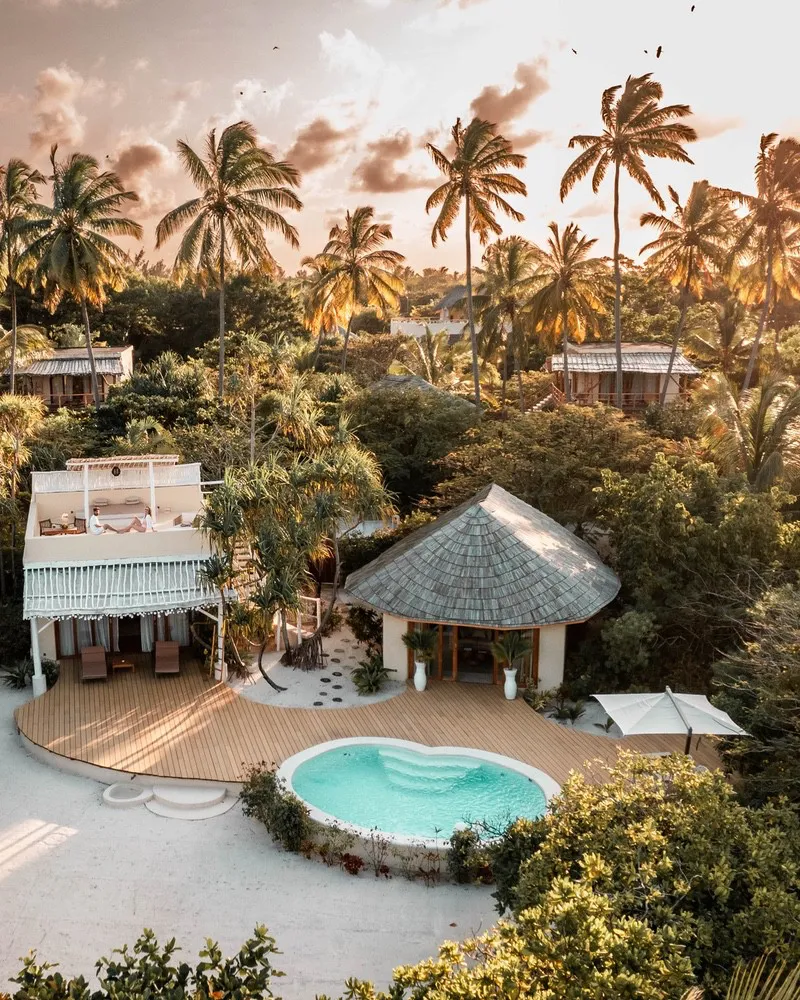
Zanzibar: choice and easy connections
Zanzibar offers the widest range of hotels and frequent connections with the mainland safari circuits. It can suit a lively resort stay, a small beachfront hotel or a more private retreat.
The island has the easiest range of safari connections and a much wider choice of accommodation than its smaller neighbours. The north, east, south and west coasts do not offer the same beach experience: tides, reef position, wind and hotel setting all affect swimming and the feel of a stay. Stone Town adds a rewarding cultural dimension, and some travellers enjoy spending a night there before heading to the coast. We look at the actual beach and room category for your dates rather than choosing from a general image of Zanzibar.
Pemba: a quieter island
Pemba has fewer hotels and a less developed tourism scene. It suits travellers who value a peaceful setting and marine activities, particularly diving, and who are comfortable with an additional connection.
Pemba appeals to travellers who want a slower, quieter finish and have a strong interest in the sea. It is not a substitute for Zanzibar if you want a broad choice of restaurants, shopping or sightseeing from the hotel. Connections and the smaller hotel selection need to be checked early, especially for a short trip. Diving and snorkelling depend on the season and local conditions; no marine encounter is guaranteed. We would give Pemba enough nights to justify the additional transfer and make the quieter atmosphere a deliberate choice.
Fanjove: a remote island finish
Fanjove is a small island off Tanzania’s southern coast with an intimate, barefoot feel. It is an appealing complement to Ruaha or Nyerere when seclusion matters more than hotel choice.
Fanjove offers a particularly distinct change of pace after the southern parks. Limited accommodation, a simple island rhythm and the journey needed to reach it are part of the experience. It suits travellers happy to trade a large resort's facilities and easy access for privacy and a sense of being away. A trip built around the Serengeti may have an easier finish on Zanzibar, while a Ruaha and Nyerere route can make Fanjove a more natural fit. We check the operating dates and transfer arrangements before recommending it.
Look beyond the beach photograph
Tides, seasonal wind, swimming conditions, room privacy and the time spent travelling are as important as the colour of the sand. The best island is the one that fits the whole journey.
A beach may look idyllic at high tide but expose a broad tidal flat later in the day. Some coasts offer better swimming at particular hours, while others appeal more for walks, reefs or a sheltered hotel pool. Wind and rainfall shift through the year, so the month matters as much as the island name. We also consider whether you want to dive, explore local culture, relax in private or have activities close by. These choices shape the hotel and coast more usefully than a generic island ranking.
How long should you stay?
Five to seven nights is a comfortable beach finish for many safari journeys, giving time to settle in after the flights and enjoy the hotel. A shorter stay may work when the coast is a brief pause, but an island with an extra connection deserves more time. The safari route and international flight home can also determine whether a final night in Stone Town or near an airport is sensible. We build those movements into the plan before deciding the number of beach nights.
Choosing your island
Choose Zanzibar for variety and simpler connections, Pemba for a quieter marine-focused stay, or Fanjove for a small and remote island experience after a southern safari. Within each choice, the individual property, beach and month still matter. Tell us how active you want to be, whether swimming or diving is important and how much travel you are willing to add. We can then explain the real trade-offs and recommend a coast that complements the safari.