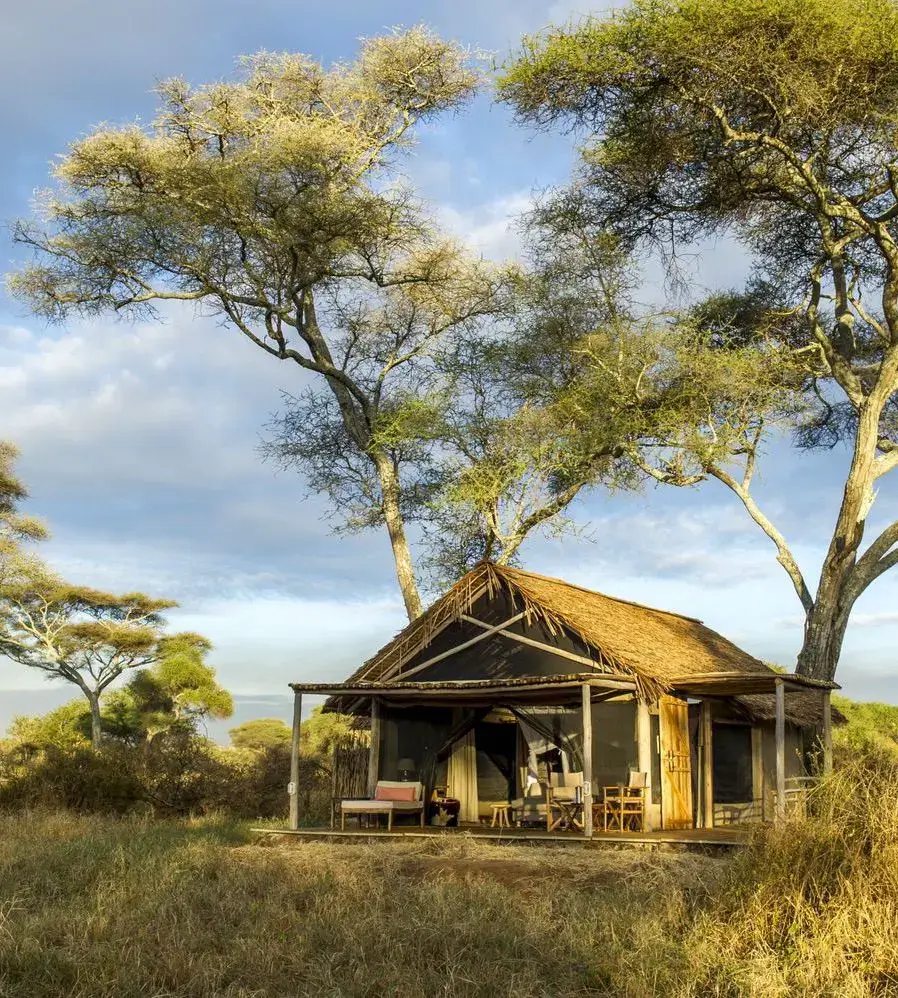
June to October
Animals gather around the Tarangire River as seasonal water sources dry. Elephant viewing is especially strong and the landscape becomes increasingly golden.
As water becomes scarcer away from the river, Tarangire can produce memorable elephant and general wildlife viewing. The park is large, however, and a lodge in its interior offers a different daily experience from one close to the busiest northern entrance. Nights are often cooler than expected and dust becomes part of the safari as the season advances. June and early July do not look identical to September or October; the wider rainfall pattern and the camp’s precise position matter more than a single label of dry season.
November to March
Short rains refresh the park, migrant birds arrive and visitor numbers fall. Wildlife disperses more widely, but the scenery and photography can be superb.
Rain changes the colour and texture of the landscape, and the baobabs can be especially photogenic against fresh growth. Migrant birds and young animals add interest, while larger mammals may spread beyond the most easily visited areas. For travellers interested in atmosphere rather than the densest possible wildlife concentration, this can be a rewarding time. It can also pair well with the southern Serengeti’s broad calving season early in the year, although the route and individual camp opening dates still need checking.
April and May
The long rains can make access less predictable and some camps close. Travellers who accept this variability may find a wonderfully quiet park.
The long rains are less predictable and the condition of smaller tracks may affect how a day unfolds. Some properties pause operations, while others remain open with a different rhythm. A low-season rate is only good value if the camp and activities you want are available and the wider itinerary makes sense. We discuss the uncertainty before recommending a wet-season visit. Travellers tied to a short window may prefer an area with a more reliable combination of access and activities.
Allow enough time
Two or three nights lets you explore beyond the busiest northern section and appreciate the baobabs, river system and changing habitats.
A one-day drive through the north shows only part of Tarangire. Two or three nights give guides time to follow the river, explore quieter habitat and adapt to recent sightings. The camp’s position may determine whether walking or night activities are offered, so we check permissions rather than assuming all Tarangire stays are alike. Tarangire works well as the opening of a northern circuit before Ngorongoro and the Serengeti, but the exact number of nights depends on the month and your wider priorities.
Elephants are only part of it
The park’s baobabs, riverine habitat, predators and birdlife give it character beyond its famous elephant herds. A slower stay reveals different parts of the landscape and makes a useful contrast with the crater and open Serengeti plains. We consider that variety when deciding whether Tarangire deserves an extra night.
Choosing a camp
An adventurous tented camp deep in the park offers a different feel from a polished lodge in the wider ecosystem. Location affects transfer time, activities and the number of other vehicles you encounter. We compare those details with the season and your preferred style before suggesting a property.