Dry season
June to October brings cooler, drier conditions. Wildlife remains concentrated, but this is also a busy period and crater descent timing makes a difference.
The crater holds resident wildlife, so there is no migration season to chase. In the drier months, mornings on the rim can be cold and the descent routes may be busy, particularly in school holidays. Starting early usually makes the day more comfortable and can provide a quieter first stretch on the floor. Afternoon light and sightings vary, so we plan the descent around the lodge location and the wider travel day rather than assuming that every visitor should follow the same schedule.
Green season
November to May creates greener scenery and dramatic skies. January to March pairs especially well with the southern Serengeti and its calving season.
Green highlands are beautiful in their own right, with dramatic skies and softer light. Rain may affect some tracks and the clarity of views from the rim, but wildlife remains present on the crater floor. January to March is often paired with the southern Serengeti, where the broad calving period can add a very different landscape and wildlife experience. April and May are wetter and some wider-circuit camps close, so the value of a green-season trip depends on the complete route, not simply the crater visit.
How long to stay
A single early crater descent is enough for many travellers. Two nights give the journey breathing space and can add highland walks or time around Karatu.
A lodge on the rim may shorten access to a particular descent road and offers the sense of waking above the crater. Karatu can give more space, different accommodation styles and access to farms or the surrounding highlands, but it changes the drive to the crater floor. Two nights usually make an early visit and an unhurried onward journey possible. If time is tight, we would rather protect the crater day than add extra stops that turn the drive into a race.
What to pack
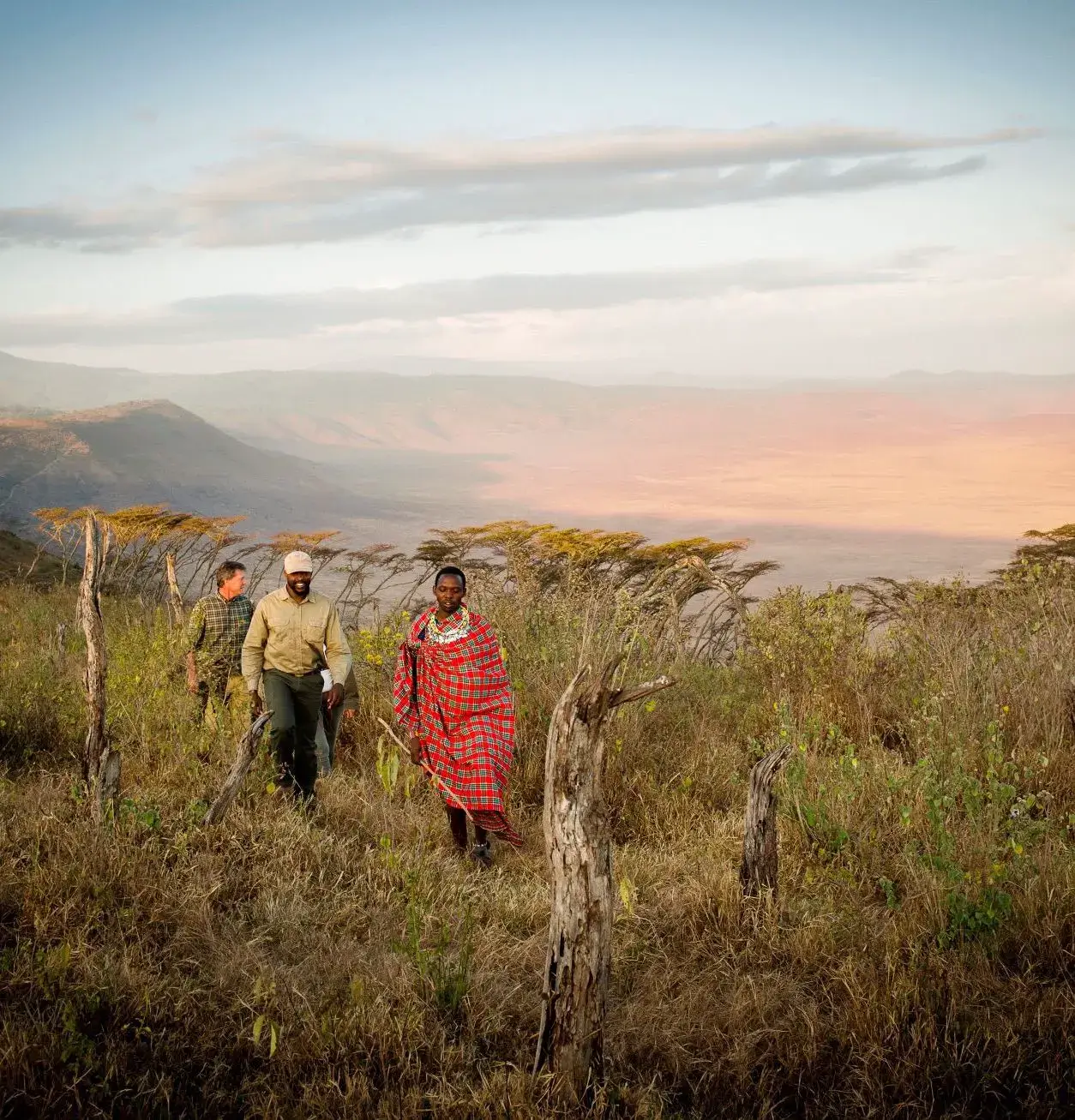
The rim sits at altitude and mornings can be cold. Bring a warm layer even when the plains below are expected to be hot.
Even at a warm time of year, the rim’s elevation can make breakfast and the first hour in the vehicle surprisingly cool. Bring layers, a windproof top and comfortable shoes. Sun exposure increases once you are on the floor, so a hat and water remain useful. Conditions on the crater rim are not a reliable guide to those in Tarangire, the Serengeti or Zanzibar; a multi-region trip needs clothing that adapts to the whole journey.
What a crater visit is like
The descent brings concentrated wildlife and a striking change from highland forest to grassland, lake and marsh. It also brings other vehicles. A private vehicle gives control over pace but cannot remove the popularity of the main tracks. We explain that trade-off honestly and choose a lodge and timing that make the day feel rewarding.
Where it fits
Ngorongoro often connects Tarangire or Lake Manyara with the Serengeti. The right order depends on international flights, the month and the chosen Serengeti area. It is an excellent element of a northern circuit, but it should have a clear purpose and enough time rather than being squeezed between long road journeys.